Last Updated: 30 October 2026
Quick Summary
Thermal imaging inspections use an infrared camera to read surface temperatures, revealing moisture, heat loss, air leakage and hidden defects before you commit to buying a home. They are non-invasive, so they show problems without lifting flooring or opening walls. Results should be treated as prompts for further investigation.
- Thermal imaging measures surface temperature and cannot see through walls.
- Scans can flag damp patches that look dry on the surface, which a moisture meter can then confirm.
- Cold patches around windows, doors and ceiling junctions can indicate heat loss or insulation gaps.
- Emissivity, reflectivity, weather and temperature differences can all distort thermal readings.
- Ask for thermal images with written findings and check the scope of any quote before booking.
Table of Contents
- How Thermal Imaging Inspections Work
- Detecting Moisture and Damp Before It Spreads
- Finding Heat Loss, Air Leaks and Insulation Gaps
- Locating Hidden Defects Without Opening Walls or Flooring
- Thermal Imaging Inspection Limitations and How to Read the Results
- What a Thermal Imaging Inspection Costs and What It Adds to a Purchase
- Booking Your Inspection Before You Make an Offer
- Frequently Asked Questions
Buying a home in Australia is likely the biggest financial decision most people make, and a quick walk-through rarely reveals what sits behind the plasterboard. Thermal imaging inspections give buyers a non-invasive way to spot moisture, heat loss, air leakage and hidden defects before they commit. Thermal imaging and moisture testing can help buyers see what a vendor’s report may not show. This guide explains what the technology can and cannot tell you, and how to use the findings in your purchase.
How Thermal Imaging Inspections Work
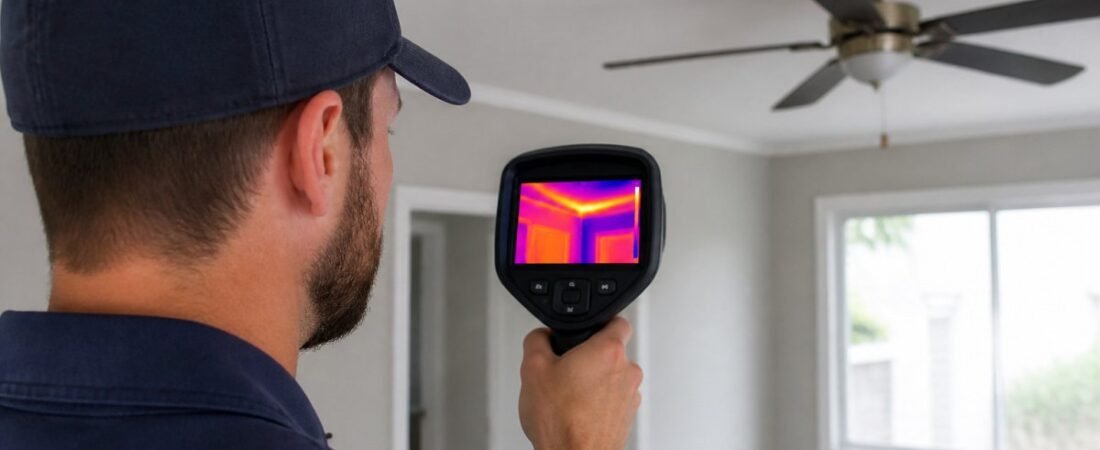
A thermal imaging inspection uses an infrared camera to measure surface temperature across walls, ceilings, floors, windows and doors. Temperature differences that a person cannot see with the naked eye appear as colour variations on the camera’s display. Areas that are cooler or warmer than their surroundings can point to moisture, insulation gaps or air movement, which the inspector then investigates further.
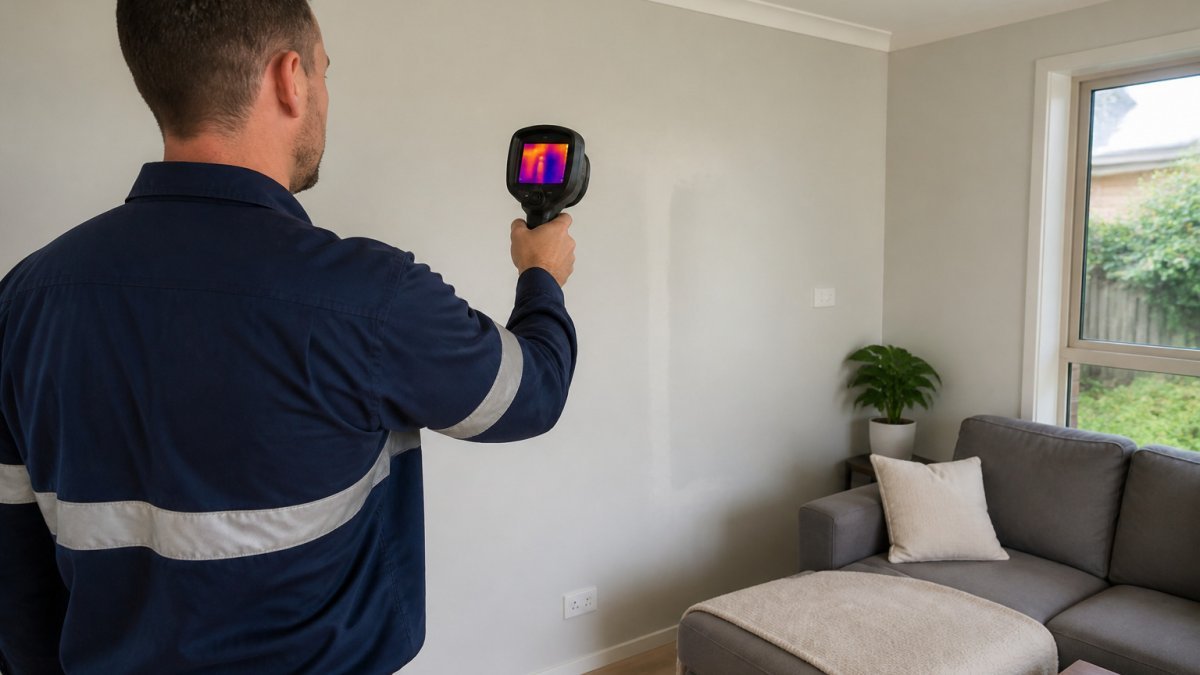
Thermal imaging does not see through walls. It records surface temperature, and the inspector interprets the pattern alongside moisture readings and a visual inspection. Australian Building Codes Board guidance on building envelope performance
Detecting Moisture and Damp Before It Spreads
Moisture is one of the most common reasons a home’s condition deteriorates over time. Water that enters a wall cavity, subfloor or roof space can cause timber decay, mould and paint failure long before the damage is visible. A thermal scan can highlight damp patches that look dry on the surface, and a moisture meter can confirm whether those patches are wet.
Catching moisture early matters because a buyer who knows about a leak before settlement can negotiate repairs or a price adjustment rather than inheriting the problem.
Finding Heat Loss, Air Leaks and Insulation Gaps
Heat loss shows up as cooler areas on a thermal image, particularly around windows, external doors, ceiling junctions and wall penetrations. Missing or compressed insulation often appears as irregular temperature patterns across a wall or ceiling. Air leakage around poorly sealed frames can have a similar effect, and it can make heating and cooling more expensive for the people who live there.
Many buyers want to know how a home will perform in winter. A thermal scan gives a snapshot of where heat is escaping, which helps you judge whether the property needs draught sealing, better insulation or other upgrades. Treat the findings as a guide to where to investigate further, not as a complete energy assessment.
Locating Hidden Defects Without Opening Walls or Flooring
Hidden defects are the problems most likely to be missed in a standard walk-through. Plumbing leaks behind tiles, electrical components that run hot, and pest activity inside wall cavities can all leave temperature signatures that a thermal camera detects. Because the scan is non-invasive, it does not require the inspector to lift flooring or open walls.
The method works best as a targeted tool. If the scan flags an area, the inspector can confirm the cause with further checks. Where a problem is confirmed, the report should explain what it is, where it is and how urgent it looks.
Thermal Imaging Inspection Limitations and How to Read the Results
Thermal imaging has clear limits, and understanding them stops buyers from reading too much into a single image. The camera does not measure moisture, insulation or air movement directly. It measures infrared radiation at the surface and converts that to an apparent temperature, so the inspector is always interpreting a pattern rather than seeing a defect. A cold patch may be a moisture problem, a missing batt of insulation, a draught, or simply a shaded area that has not warmed up. An accurate report explains the conditions at the time of inspection and separates confirmed findings from possibilities.
Several physical factors affect what the camera records:
- Emissivity. Different materials radiate heat at different rates. Bare metal, polished tiles and some glazing have low emissivity and can read as falsely hot or cold.
- Reflectivity. Shiny surfaces can reflect body heat or nearby heat sources, producing a bright patch that is not a real temperature difference.
- Temperature differential. A scan works best when the inside and outside temperatures differ. On a mild day with the heating off, a missing batt of insulation may not show up at all because there is no temperature difference to reveal it.
- Weather and sunlight. Direct sun on a wall, recent rain, wind chill and rapid changes in outside temperature all distort surface readings. An inspection carried out in the wrong conditions can produce misleading images.
- Obstruction and depth. The camera reads the surface only. Furniture, stored goods, ceiling insulation and wall linings all mask what lies behind them, and the method cannot see deep into a wall cavity.
A thermal anomaly is not a diagnosis. Treat any single image as a prompt to investigate further, not as proof of a defect.
Ask for the thermal images alongside the written findings, and check whether each image is linked to a moisture reading or visual observation. Be cautious with any report that treats a thermal anomaly as a definite defect without further evidence. Clear, jargon-free reporting should tell you what was found, what was not found, and what needs further investigation. Where a finding matters to your decision, ask what follow-up test would confirm it, a moisture meter reading, a targeted invasive check, or a specialist assessment.
What a Thermal Imaging Inspection Costs and What It Adds to a Purchase
Pricing depends on the property’s size, its location and the scope of the work. For current pricing and a quote for your home, visit the Resicert website or contact our team directly.
Even without a fixed figure, it helps to know what drives the cost so you can compare quotes fairly:
- Property size and layout. A larger home, multiple storeys, a granny flat or a complex roofline takes longer to scan and adds to the fee.
- Access. Subfloors, roof spaces and locked areas all affect how much of the property can be inspected. Restricted access may limit the scope rather than the price.
- Scope of the report. A combined building and pest inspection with thermal imaging and moisture testing covers more ground than a thermal scan alone, and the fee reflects that.
- Travel and location. Properties further from the inspector’s base may involve additional travel.
When you compare quotes, compare the scope, not just the price. Confirm that thermal imaging and moisture testing are included, that the inspector will provide the images with the written findings, and that the report separates confirmed defects from areas needing further investigation.
The value of the inspection comes from what it helps you avoid. A report that identifies a leak, a pest problem or a safety issue before you sign can protect you from unexpected repair costs after settlement, and it gives you evidence to use in negotiations. A moisture problem found early may be a relatively minor repair; the same problem left to spread through a wall cavity or subfloor can involve timber replacement, mould remediation and relining. The inspection fee is usually small relative to the repair bill it can help you avoid, and it gives you a documented basis for asking the vendor to fix an issue or adjust the price. Compare the scope of any inspection you consider, not just its price, and confirm that thermal imaging and moisture testing are included.
The article lists the main factors that affect what a thermal imaging inspection costs, which a buyer can use when comparing quotes.
| Cost factor | What affects it | What to check |
|---|---|---|
| Property size and layout | Larger homes, multiple storeys, granny flats, complex rooflines | Confirm the quote covers the whole property |
| Access | Subfloors, roof spaces, locked areas | Restricted access may limit scope |
| Scope of report | Thermal imaging and moisture testing only, or combined inspection | Compare scope, not just price |
| Travel and location | Distance from the inspector’s base | Ask whether travel is included |
Booking Your Inspection Before You Make an Offer
Book your inspection before you make an offer, or as a condition of contract, so the findings can inform your decision. Reports are delivered within 24 hours, which is useful when your timeframe is tight. Provide the property address, the access arrangements and any questions you have when you book, so the inspector can focus on your priorities.
If you are buying in Canberra and want an independent assessment beyond the vendor’s report, book your building and pest inspection with Resicert to get a clear quote and turnaround time. Read the findings carefully, ask questions about anything unclear, and use the results to make a confident purchase decision.
Frequently Asked Questions
Can thermal imaging find termites?
Thermal imaging can flag temperature anomalies that may indicate pest activity or moisture, which often attracts pests. A confirmed termite finding requires a targeted inspection, so ask whether the inspection includes a dedicated termite check. Learn about our termite inspection service.
Is a thermal imaging inspection enough on its own?
No. Thermal imaging works best alongside moisture testing and a visual inspection by a qualified inspector.
Do I still need a report if the vendor has provided one?
A vendor’s report is prepared for the seller. An independent report gives you a fresh assessment carried out for you.
Will thermal imaging see through walls?
No. It measures surface temperature, so the inspector interprets patterns and then investigates further where needed.
Frequently Asked Questions
What are the benefits of thermal imaging inspections?
Thermal imaging inspections show temperature differences across walls, ceilings, floors and windows, which helps reveal heat loss, moisture, insulation gaps and some electrical overheating. They are non-invasive, so the inspector does not need to open walls or lift flooring. For a buyer, the main advantage is early warning of problems that a visual check may miss, giving you better information before you sign a contract and more grounds to negotiate repairs or price.
Can thermal imaging detect moisture behind walls?
Thermal imaging can identify areas where moisture is likely present because wet materials usually cool differently from dry ones. However, the camera shows surface temperature patterns, not the moisture itself. A good inspector confirms suspect areas with moisture meters before drawing conclusions. This combination of thermal imaging and moisture testing helps separate genuine water intrusion from harmless condensation or temperature variation.
What are the limitations of thermal imaging in a building inspection?
Thermal imaging depends on conditions. Results are less reliable on very hot days, after recent rain, or when the house has not had a temperature difference between inside and outside for several hours. The camera cannot see through solid materials, so it cannot confirm the cause of a hot or cold spot. Interpretation also requires experience, which is why reports should explain what each finding means and what further checks, if any, are needed.
Is a thermal imaging inspection worth it when buying a property?
For many buyers it is worth considering, particularly for older homes, properties with suspected damp or poor insulation, and purchases where you have limited ability to inspect concealed areas. Pricing depends on the property and the inspection package, so check current rates and what is included directly with Resicert before booking. Weigh the cost against the repair bills and negotiation leverage a single hidden defect could expose.
